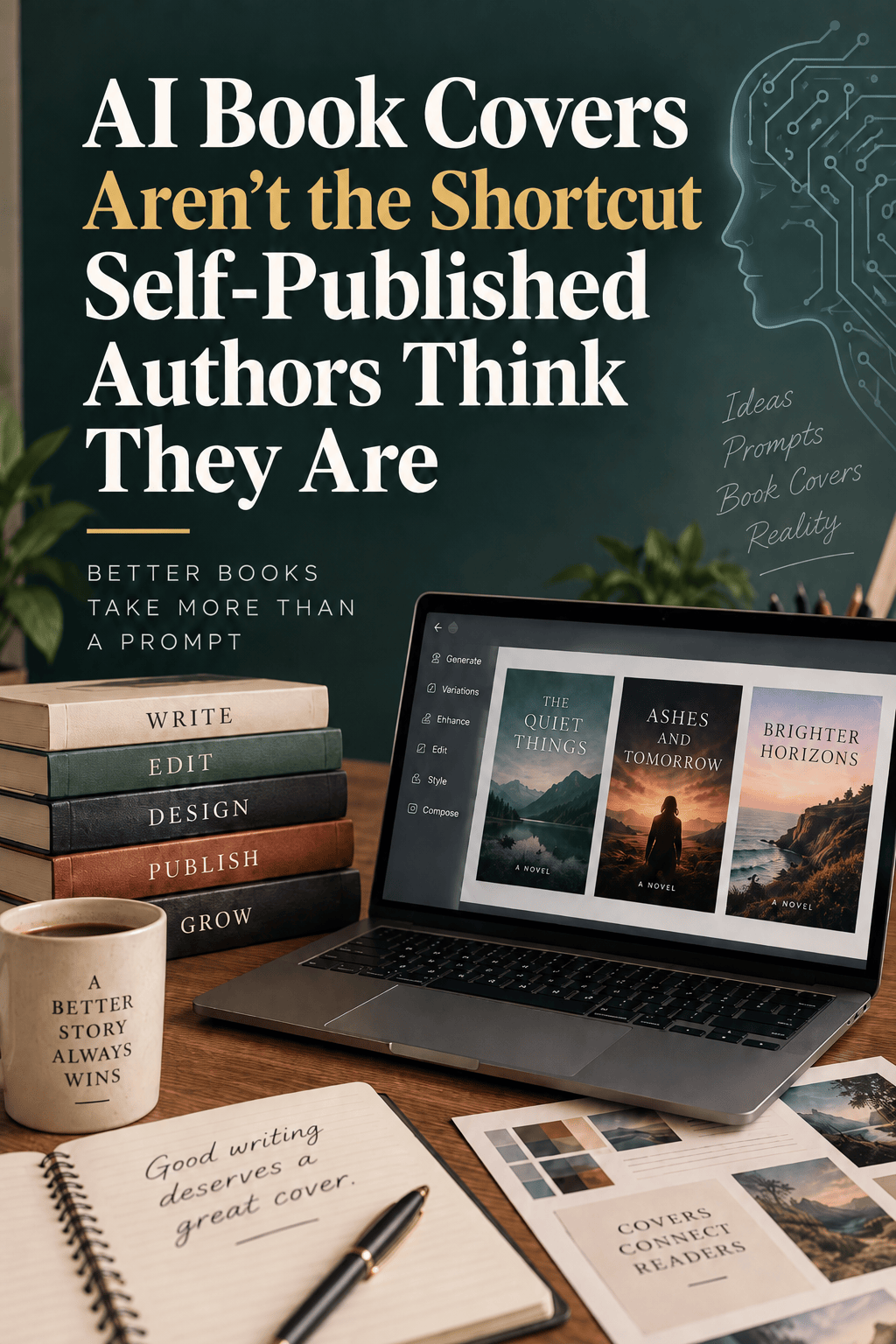


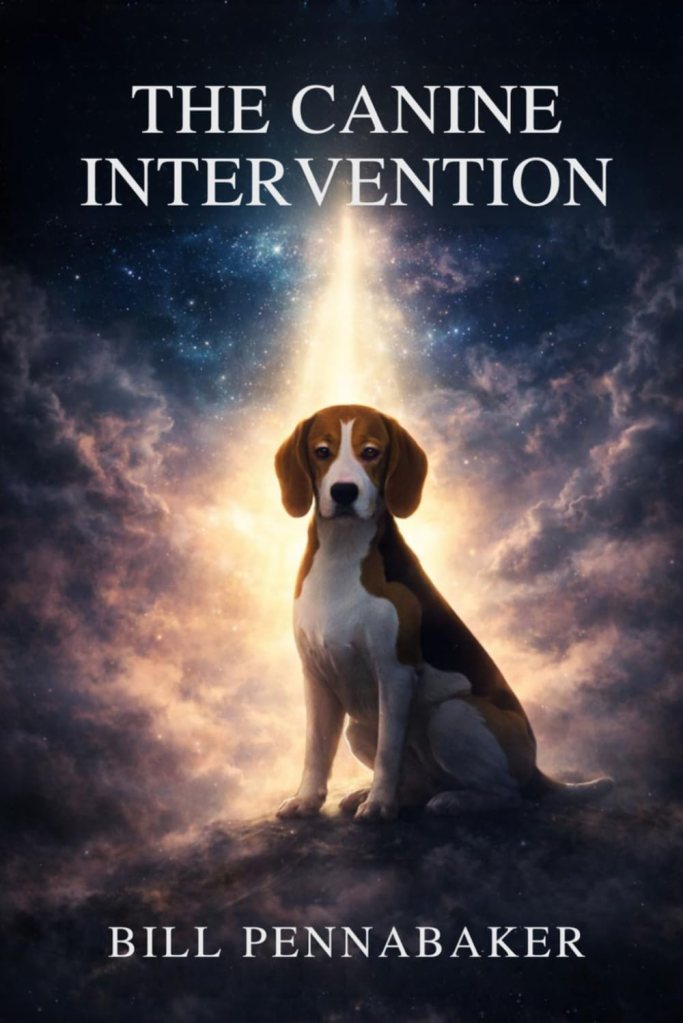



A recent discussion in Reddit’s r/KDP community began with a familiar warning to independent authors: AI-generated book covers are not the inexpensive shortcut many writers think they are. The original poster, who identified themselves as both an author and a bookseller, argued that poorly designed AI covers can hurt sales and may even cause readers to assume the book itself was written using AI.
The discussion that followed was much more interesting than the original argument. It quickly became the kind of debate we are seeing everywhere AI enters a creative industry. One side essentially said, “AI is ruining creative work.” The other said, “AI can produce work just as good as—or better than—many humans.” I think both arguments miss something important.
The question isn’t whether AI can create a book cover. Clearly, it can. The question is whether the person using AI understands what makes a good book cover. Those are two very different things.
A beautiful picture is not necessarily a good book cover
This was probably the most important point raised in the entire Reddit discussion. One commenter, who said they had designed covers using Photoshop and Illustrator long before generative AI existed, pointed out that bad DIY covers existed long before AI. Authors stretched stock photography, chose inappropriate fonts, crowded covers with text and created designs that didn’t communicate genre.
AI didn’t invent bad cover design. It simply gave people another way to make it. That commenter described the problem well: people may not understand composition, hierarchy, contrast, typography, thumbnail visibility or genre conventions, and no piece of software automatically gives someone that knowledge.
I agree. One of the biggest misconceptions about AI is that prompting replaces creative judgment. It doesn’t. You can ask an image generator to create an exquisite Victorian mansion beneath a glowing moon surrounded by roses, fog, ravens and an elegantly dressed woman standing on a cliff.
It may produce something gorgeous. That doesn’t mean it belongs on the cover of your cozy mystery. A book cover has a job. It needs to tell a potential reader, almost instantaneously, what kind of reading experience is waiting for them.
Romance looks different from horror. Cozy mystery looks different from psychological suspense. Middle-grade fantasy looks different from adult fantasy. Christian fiction looks different from dark romance. And readers make many of those distinctions while looking at an image that’s barely larger than a postage stamp on their phone. AI cannot make those strategic decisions for an author who doesn’t understand them.
AI-generated and AI-designed aren’t necessarily the same thing
Another distinction in the Reddit discussion deserves more attention. There is a significant difference between typing: “Make me a fantasy book cover” and intentionally developing a visual concept, generating artwork, rejecting dozens of possibilities, directing revisions, combining or editing elements, selecting typography, establishing hierarchy and assembling the final cover using design software. Both processes may involve AI. They aren’t the same creative process.
Several commenters described using AI more like a visual production tool than an autonomous designer. One commenter specifically argued that AI-generated artwork could be created separately while typography and final composition were handled in traditional design software. Another described spending weeks refining an AI-assisted vision rather than accepting the first generated image.
That distinction gets lost when we label everything simply an “AI cover.” If I commission an illustrator, I still have to know what I want. If I purchase stock photography, I still have to choose the right image. If I use Photoshop, Photoshop doesn’t decide what my cover should communicate. And if I use generative AI, the responsibility hasn’t suddenly transferred from me to the machine. The tool can execute. The author still has to direct.
Cost matters more than some people want to admit
This is where I think conversations about AI and independent publishing can become disconnected from reality. Hiring talented artists and designers costs money because skilled creative professionals deserve to be paid for their work. But many independent authors simply do not have traditional-publishing budgets.
One Reddit commenter challenged the idea that authors should simply hire inexpensive designers, pointing out that many first-time indie authors lose money on their first books and that several hundred dollars can be a significant investment. Another questioned whether telling artists they deserve fair compensation while simultaneously advising authors to find someone willing to design a professional cover for extremely low prices really solves the ethical problem.
That’s a fair question. Independent publishing has always required authors to make decisions based on resources. Before generative AI, some authors hired professional designers. Others purchased premade covers. Others used stock photography and Canva. Others learned Photoshop. Some drew their own artwork. And yes, some of those covers were terrible. Technology has now expanded the toolbox.
For an author with limited financial resources but a strong visual sense, AI can provide access to imagery that previously would have required expensive custom illustration. Pretending that advantage doesn’t exist doesn’t make the ethical conversation stronger. It makes it less credible. We can acknowledge the legitimate concerns artists have about generative AI while also acknowledging why independent creators find these tools attractive. Both things can be true.
Reader perception still matters
There is another reality authors can’t ignore simply because they believe their position is correct. Some readers dislike AI-generated artwork intensely.
In the Reddit discussion, several people said an obvious AI cover would cause them to immediately reject a book. Others said they either didn’t care or had purchased books whose covers they believed were AI-generated because they found the covers attractive. Still others argued that readers often cannot reliably identify AI-generated images in the first place. That makes reader perception complicated. And this is why I wouldn’t make publishing decisions based solely on sweeping declarations such as:
“Readers hate AI covers” or “Readers don’t care about AI.” Your readers may care. Mine may not. Romance readers may respond differently from children’s-book buyers. Fantasy readers may respond differently from nonfiction readers. Expectations may even differ among subgenres.
One commenter offered what I thought was one of the most practical suggestions in the entire discussion: stop focusing exclusively on whether people can identify AI and test the cover against comparable books in the genre. Show it at thumbnail size and ask readers which book they would click and what genre they expect it to be.
Exactly. Because ultimately the commercial question isn’t:
“Can you tell I used AI?” It is: “Does this cover make the right reader want to learn more about this book?”
“Does this cover make the right reader want to learn more about this book?”
And yes, authors still have responsibilities
Using AI doesn’t eliminate responsibility. It increases the need for it. Authors need to inspect generated images carefully. We need to watch for strange anatomy, nonsensical details, visual inconsistencies and generic compositions. We need to understand typography instead of allowing an image generator to randomly place words across artwork. We need to know enough about our genres to recognize when a beautiful image is sending completely the wrong message.
We also need to understand the rules of the platforms where we publish. Amazon KDP currently requires publishers to disclose AI-generated text, images and translations during the publishing process, including AI-generated cover and interior artwork. KDP distinguishes this from AI-assisted work, such as using AI to brainstorm or refine something the creator ultimately produces themselves.
And authors still bear responsibility for ensuring their published material complies with intellectual-property and other content requirements. AI isn’t a magical exemption from professional standards.
The real divide isn’t human versus AI
What struck me most about the Reddit discussion was one comment near the end. The commenter said authors didn’t need another person simply telling them, “Don’t do that.” They needed someone saying:
Here is what you need to consider when designing a book cover.
I think that’s exactly where this conversation should go. Because technology isn’t going backward. The useful question for independent authors isn’t whether AI should exist. It does. The useful questions are:
Does your cover communicate genre?
Does the title remain readable at thumbnail size?
Is there clear visual hierarchy?
Does the artwork look intentional?
Does it resemble the professional expectations readers already have for books like yours?
Does it reflect the story inside?
Would your target reader click it?
And perhaps most importantly:
Did you make deliberate creative choices, or did you simply accept whatever the machine gave you?
That distinction matters to me. I don’t believe using AI automatically makes someone creative. But I don’t believe using AI automatically makes someone uncreative either. A paintbrush doesn’t make someone a painter. Photoshop doesn’t make someone a graphic designer. Canva doesn’t make someone understand typography. Owning a camera doesn’t make someone a photographer.
And typing a prompt doesn’t make someone an art director. The creative value remains in the decisions. AI can generate an image.
You still have to know what you’re trying to say.
And when it comes to book covers, perhaps that’s the lesson worth carrying forward. The future of cover design isn’t going to be determined by whether people shout “AI slop” or “AI is better” loudly enough on the internet. It will be determined where publishing has always been determined:
By whether an author can put the right book, with the right presentation, in front of the right reader—and make that reader curious enough to open it.


Leave a Reply