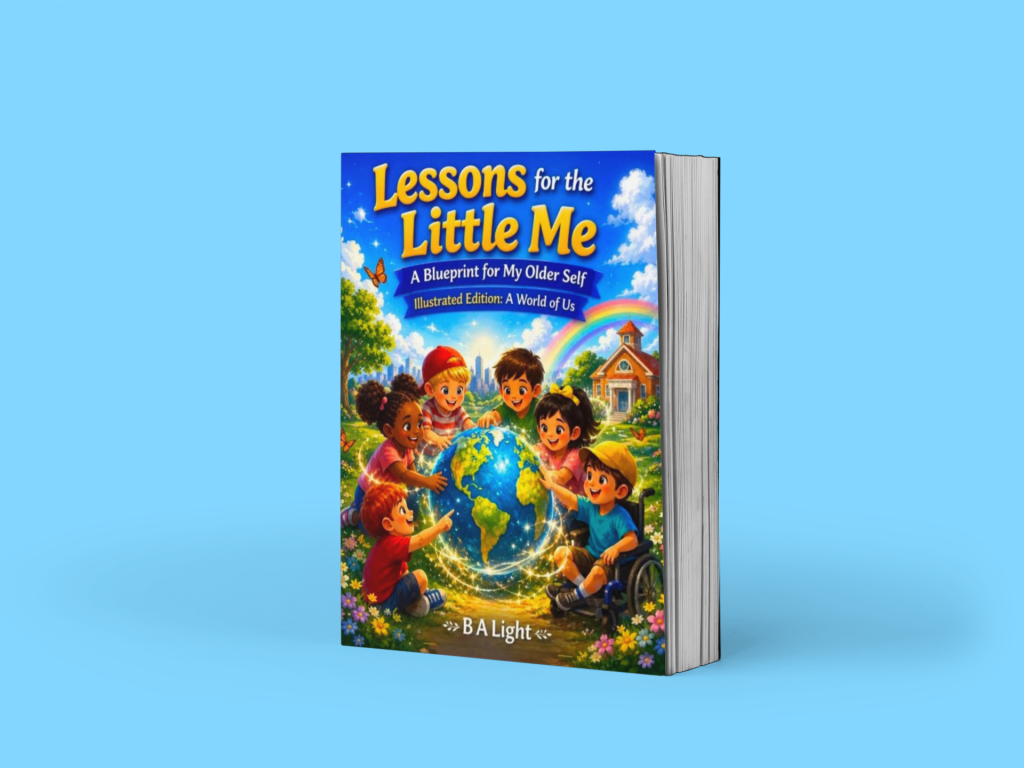





What if the most important lessons we teach children are not about getting ahead, but about understanding who they are, believing in what they can become, and learning how to make the world a little kinder? That question sits at the heart of BA Light’s Lessons for the Little Me: A Blueprint for My Older Self, a beautifully illustrated collection of sixteen life lessons designed to encourage children as they grow. With its vibrant artwork, gentle language, and thoughtful messages, the book offers more than positive affirmations. It invites children to develop confidence, understand their feelings, embrace their differences, and recognize the value of the people around them. A heartfelt reminder that children do not have to become extraordinary to know they already matter.
From its opening lesson, “You Are Enough,” Light establishes a message that carries throughout the book. Children are reminded that perfection is not a requirement for being loved, respected, or valued. They are encouraged to discover their own strengths rather than compare themselves with others. It is a powerful starting point, particularly in a world where children can begin measuring themselves against others at an early age. The lessons that follow build on this foundation. “Feelings Are Okay” gives children permission to experience sadness, fear, happiness, and uncertainty without shame. “Start Again” encourages them to learn from mistakes, while “Be Brave” offers a thoughtful reminder that courage does not always mean being fearless. One of the book’s most meaningful ideas is that bravery sometimes involves asking for help, speaking up, or admitting that you are not ready. This approach gives children a more realistic understanding of courage. B A Light turns everyday struggles into gentle lessons about courage, patience, and self-belief.
The book’s illustrations bring these messages to life. Bright colors, expressive characters, and imaginative landscapes create a world filled with possibility. Children appear in classrooms, neighborhoods, sports settings, and community gatherings, giving the lessons a connection to familiar experiences. The artwork also celebrates diversity. Children of different backgrounds and abilities are shown participating, learning, playing, and helping one another. This inclusive approach feels especially important in a book that places belonging at the center of personal growth. The illustrations do more than decorate the pages. They help younger readers understand the lessons through recognizable actions and emotions. Its colorful illustrations make kindness, courage, and belonging feel like experiences children can see and share.
Another strength is the way Light balances individual ambition with responsibility toward others. Several lessons encourage children to dream big, practice their skills, and continue working toward their goals. Yet the book also reminds them that their talents can bring joy and encouragement to other people. The lesson about sharing one’s gifts is particularly meaningful. Rather than treating achievement as a purely personal reward, Light suggests that success can also be measured by the positive difference someone makes in another person’s life. This idea becomes even more important in lessons such as “Kindness Is Power,” “Together We Grow,” and “Everyone Belongs.” Through these messages, children are encouraged to recognize that compassion, cooperation, and respect are essential parts of becoming their best selves. The book’s most lasting message is that personal growth becomes more meaningful when it makes room for others.
The writing is straightforward and warm, with short passages that make the lessons approachable for younger readers. Its repeated address to “Little Me” creates the feeling of a loving conversation between a child and a wiser future self. At times, the collection repeats familiar ideas about dreaming, believing, and never giving up. A few of the longer passages also contain more text than younger readers may comfortably absorb in one sitting. Still, these qualities are less distracting when the book is approached as a collection of reflections to explore over time.
The format encourages readers to revisit particular lessons when they become relevant. A child struggling with disappointment may find comfort in “Start Again.” Someone feeling uncertain may connect with “Trust Your Heart.” A child who feels different from classmates may find reassurance in “Everyone Belongs.” The interactive “Dear Older Me” page adds a personal dimension by inviting readers to write a message to their future selves. It is a fitting addition to a book about remembering one’s values while continuing to grow. The closing blueprint brings the collection together, emphasizing that kindness, courage, and love are qualities worth carrying into adulthood. More than a collection of affirmations, this is a keepsake of values children can carry into the people they become.
What makes Lessons for the Little Me appealing is its sincere belief that children deserve encouragement not only when they succeed, but also when they struggle, question themselves, or need time to grow. It is not a traditional storybook with a central plot or a single character’s adventure. Instead, it offers a series of thoughtful reminders that can open conversations between children and the adults who care for them.
For parents, teachers, grandparents, and mentors seeking an illustrated book about self-worth, emotional awareness, perseverance, and kindness, B A Light’s work offers a hopeful and meaningful reading experience. Ultimately, Lessons for the Little Me reminds us that growing up is not simply about reaching a destination. It is about discovering who we are, learning from the journey, and choosing how we treat others along the way.
Discover Lessons for the Little Me: A Blueprint for My Older Self by BA Light and explore its uplifting lessons with a young reader in your life.


Leave a Reply