






⭐⭐⭐⭐⭐(5 Stars) A thoughtful and ultimately moving examination of human agency, the limits of knowledge, and the lasting influence of lives beyond their immediate circumstances.
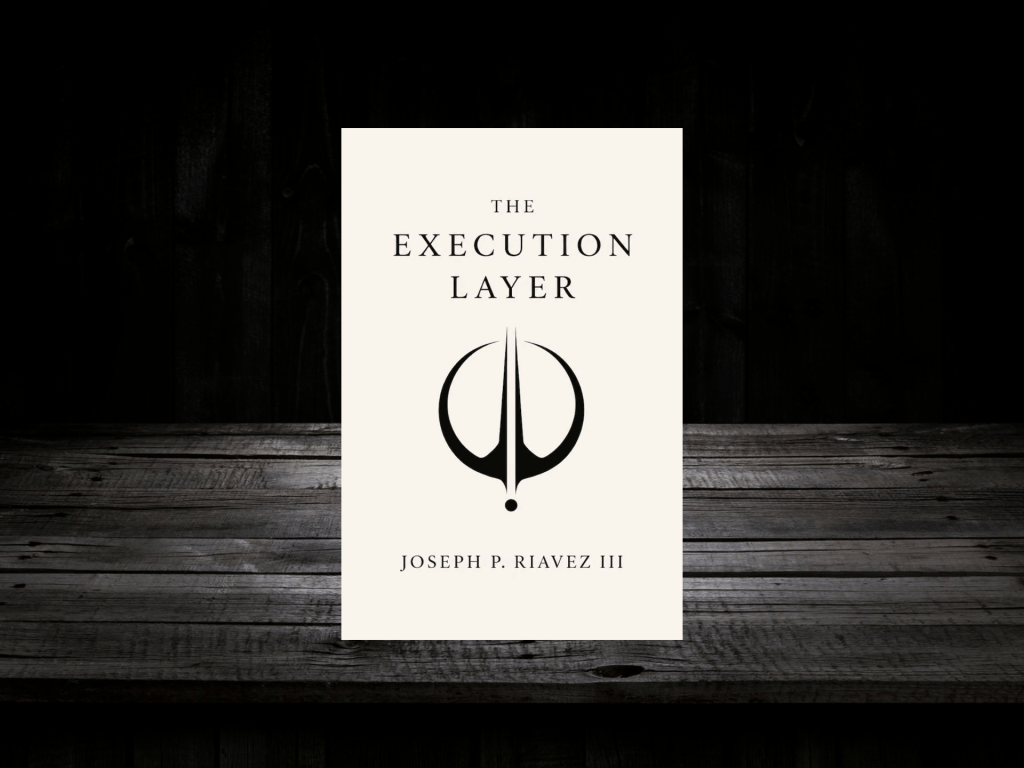
What does it mean to act responsibly when the conditions governing our choices lie beyond our control? How much can we truly know about another person’s experience or even our own? And what remains of human influence after the individuals responsible for it are gone? These questions form the foundation of Joseph P. Riavez III’s The Execution Layer: Human Behavior at the Limits of Agency, an ambitious work of philosophical nonfiction examining human behavior, personal identity, responsibility, and the ways our experiences continue to shape the world.
Rather than constructing a conventional philosophical argument, Riavez approaches his subject through observation, reconstruction, and the careful examination of evidence. His background in forensic investigation informs a distinctive method: establish what can be known, recognize the limits of that knowledge, and avoid confusing interpretation with proof. The result is an investigation that moves from practical examples of human decision-making to deeper questions about memory, identity, and mortality.
Riavez turns the careful reconstruction of evidence into a profound investigation of what it means to be human. At the center of the investigation is a simple distinction: responsibility does not necessarily imply control. Individuals may be accountable for their decisions without possessing the authority, resources, or information necessary to determine their outcomes. Riavez develops this idea through examples drawn from education, criminal justice, healthcare, forensic investigation, and financial markets.
For example, a teacher completes the required curriculum, yet students later struggle with skills they were expected to learn. A forensic examiner recognizes the appropriate investigative procedure but cannot proceed without legal authorization or sufficient technology. A parole officer responds appropriately to a violation, only to encounter a similar problem months later. These examples challenge the assumption that identifying a responsible person adequately explains why something happened. Riavez does not suggest that accountability should be abandoned. Instead, he questions whether responsibility alone can explain outcomes shaped by circumstances beyond an individual’s control.
The Execution Layer reveals how people can continue functioning within conditions they understand but cannot fully change. The book becomes particularly compelling when examining how successful adaptation can conceal unresolved problems. In a discussion of financial traders responding to market uncertainty, Riavez explores the physical effects of sustained pressure. Traders may remain knowledgeable, productive, and capable of performing their responsibilities even as their bodies register significant stress. Continued performance, he suggests, should not be mistaken for evidence that the conditions producing the stress have disappeared.
The observation has implications beyond financial markets. Employees navigate organizational demands they cannot alter. Healthcare professionals work within the limits of available resources and established procedures. Individuals adjust to social and economic circumstances without necessarily possessing the means to transform them. Riavez encourages readers to distinguish between adapting to a condition and resolving it, an important difference often overlooked when evaluating human behavior.
As the investigation progresses, Riavez shifts his attention from the actions being examined to the limitations of the observer conducting the examination. If reconstructing an event depends on available evidence, how much of an experience can anyone truly recover? A photograph may preserve a moment without conveying its emotional significance. An official report may establish what happened without fully explaining the motivations or perceptions of those involved. Even personal memories can change in meaning as individuals gain knowledge and experience.
Riavez explores this through the relationship between childhood memories and adult understanding. An event that seemed insignificant during childhood may take on an entirely different meaning when reconsidered decades later. Although the event itself remains unchanged, the person remembering it now possesses knowledge and perspective unavailable to their younger self. This raises one of the book’s most intriguing philosophical questions: If our understanding continually changes, what does it mean to remain the same person throughout our lives?
Rather than offering a definitive theory of consciousness, Riavez examines the relationship between continuity and transformation. Individuals retain recognizable histories while undergoing significant changes in memory, understanding, and perspective. Personal identity becomes more complicated than simply remaining the same individual over time. Its exploration of memory and identity gives the book a rare combination of philosophical depth and personal intimacy.
These reflections provide a welcome shift from the procedural discussions of the opening chapters. Although the writing remains analytical, the subject becomes increasingly personal. Readers need not possess a specialized interest in philosophy to recognize how differently they may understand experiences from earlier stages of their lives.
The investigation then expands beyond individual identity to consider the conditions people inherit from previous generations. Human beings enter environments already shaped by decisions, institutions, languages, and practices established before their arrival. A traveler follows a road constructed according to choices made by people they may never meet. An employee follows procedures developed in response to circumstances whose origins have long been forgotten. These examples illustrate how human activity continues through systems that no longer require the presence, or even the remembrance, of their creators.
Riavez suggests that individual actions may influence circumstances far beyond their immediate consequences. People participate in systems inherited from previous generations while preserving, modifying, or transmitting those systems to future participants. Human influence, therefore, cannot always be measured through immediate results or personal intentions. This becomes one of the book’s most thought-provoking ideas. Although individuals operate within limitations created by the past, their actions may also help shape the conditions others will inherit.
The investigation takes its most emotionally significant turn when Riavez introduces experiences involving his family, particularly his daughter’s medical crisis. What previously appeared to be an abstract examination of observation and incomplete knowledge suddenly carries immediate human consequences. Within a family’s medical uncertainty, the limitations of available information shape decisions, communication, and the search for answers.
Riavez handles these passages with notable restraint. Rather than using the crisis to create an emotionally satisfying conclusion, he allows the uncertainty itself to demonstrate the limits of understanding. The contrast between the personal nature of the experience and the disciplined language used to examine it gives these sections considerable emotional weight.
The author’s reflections on the death of his sister introduce another dimension. Her absence leaves questions that can no longer be resolved through additional conversation or clarification. Here, the limits of knowledge become inseparable from mortality. The inability to ask, reconsider, or seek further explanation leaves certain experiences permanently beyond direct understanding. The book reaches its greatest emotional power when its philosophical questions enter the author’s own experiences of family, illness, and loss.
These personal revelations also transform the meaning of the earlier chapters. What initially appears to be a detached examination of professional and institutional processes gradually emerges as a deeply human effort to understand experiences that resist complete explanation. The author’s commitment to distinguishing evidence from interpretation becomes especially meaningful when certainty is most urgently desired but remains unavailable.
Still, The Execution Layer’s methodical approach occasionally becomes repetitive, particularly when Riavez revisits the distinctions among responsibility, control, observation, and interpretation. Yet the repetition serves the book’s investigative purpose. Rather than moving quickly from one conclusion to another, Riavez builds his ideas through accumulated observations. Examples that initially appear unrelated gradually reveal a larger examination of how human experiences are shaped, understood, and carried forward.
The Execution Layer is neither conventional self-help nor a philosophical argument promising a complete explanation of human existence. Its measured prose and investigative approach require patience, but the intellectual effort is rewarded by a conclusion that connects abstract questions with recognizable human experiences. Readers interested in philosophy, psychology, systems thinking, and human identity will find much to consider in Riavez’s distinctive exploration of the relationship between individual lives and the world they inherit.
The Execution Layer by Joseph P. Riavez III order today at Amazon.


Leave a Reply