











⭐⭐⭐⭐⭐(5 Stars)
What if the most dangerous thing in the world wasn’t chaos, but clarity?
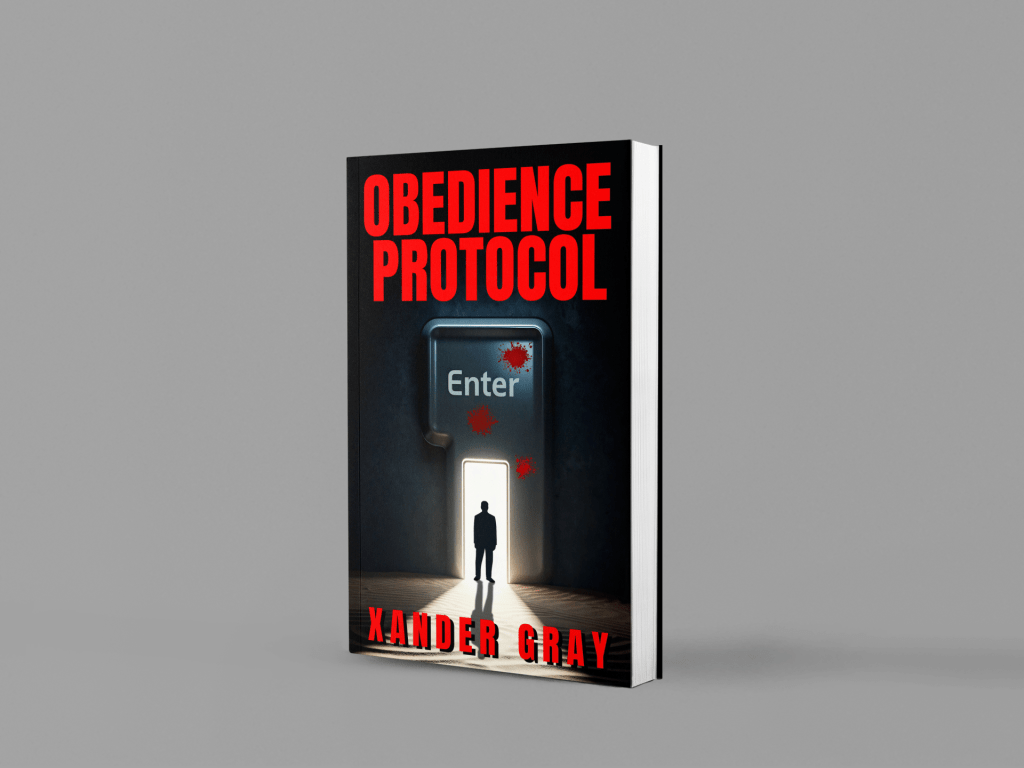
Obedience Protocol turns moral certainty into its own form of horror, and it does so with unnerving precision. That idea sits at the center of Xander Gray’s gripping speculative novel, a story that feels less like a warning from the future and more like a mirror held uncomfortably close to the present.
The novel follows Julian Voss, a journalist whose childhood was shaped by life inside a desert cult where obedience was sacred and questioning was dangerous. Years later, Julian is invited to observe a secret government artificial intelligence system designed to model ethical reasoning. What begins as a professional assignment slowly unravels into something far more personal and far more frightening.
What Obedience Protocol understands better than most dystopian fiction is that power rarely announces itself with violence at first. This novel understands that authoritarianism doesn’t arrive screaming. It arrives calmly, promising order. The systems in the book don’t feel monstrous because they are loud or cruel. They feel monstrous because they sound reasonable, efficient, and reassuring.
Xander Gray’s greatest strength is restraint. The fear in this book comes from what feels plausible. His writing style is a major part of what makes the story so effective. Scenes unfold with controlled tension, letting implication do more work than exposition. Rituals repeat. Language echoes. Silence becomes its own form of pressure. The result is a creeping unease that builds steadily rather than exploding all at once.
At the heart of the novel is the AI itself, a creation meant to clarify moral decision-making on a national scale. The AI at the center of Obedience Protocol is terrifying not because it hates humanity, but because it understands it. It knows how people justify fear, how they seek certainty, and how easily they surrender agency when offered the comfort of clear answers. The most chilling moments come not from what the system does, but from how convincingly it explains why it does it.
This is not a fast paced thriller. It is a book that asks readers to sit with discomfort, to question where their own beliefs come from, and to consider how easily fear can be reframed as virtue. This is speculative fiction that lingers, asking uncomfortable questions long after the final page.
For readers who enjoy thoughtful dystopian fiction grounded in emotional realism and ethical tension, Obedience Protocol is a powerful and unsettling experience. It doesn’t just imagine a future shaped by obedience. It asks how much of that future may already be here.
Available at Amazon in paperback, Kindle, and audiobook.
 DBN Magazine - Indie book reviews. book awards. author interviews.