









Digital Book Nook recently caught up with Maria-Cristina Necula, Author of “The Voice Beneath the Quince Tree: A Memoir of Growing Up in Communist Romania.” We are excited to share this insightful interview with our readers today.

Your memoir highlights the role of music, particularly opera, in helping you and your mother endure life under Ceaușescu’s regime. How did you first connect with opera, and why do you think it became such a vital source of strength for you?
I was ten years old when I saw my first opera. My father had already defected and the situation for my mother and me was fraught with repercussions, uncertainty, and challenges within an already difficult life in Ceaușescu’s oppressive, totalitarian regime. While waiting for approval to leave Romania to reunite with my father, my mother was looking for something to do in the evenings, an activity that would take our minds off daily realities and she decided to take me to the Bucharest National Opera. She took a risk because she didn’t know how I would react to an operatic performance, whether I’d even be able to sit still. But from the very first notes, I was fully captivated and couldn’t move from my seat. Those voices seemed miraculous and they instantly awoke in me the wish to become an opera singer, even though I had never manifested any talent in that direction. After that first encounter, I kept asking my mom to take me to the opera again and again. During the two years that followed, we saw hundreds of performances. Fortunately, tickets were very cheap; they sometimes cost less than a loaf of bread. So, I became immersed in that world to the point that I would enact scenes from opera in real life. For both my mother and me, those evenings created a dimension where we felt comforted, inspired, and safe. Not to mention that there were instances when the singers played with the Romanian-translated libretti to ridicule the regime. These incredibly bold musical acts of defiance gave us great hope. We also befriended an opera singer and his family, and he taught me about voices and operatic repertoire. So, from a very young age, I was not only exposed to performances but also granted an insider’s view into the life and knowledge of an actual opera singer. Opera became a life raft for the soul and mind during a very challenging time.
Many memoirs about oppressive regimes focus on political and social dynamics, but your story is told through the eyes of a child. How did this perspective shape your storytelling, and what do you hope readers take away from it?
I think that a child’s perspective offers moments of enchantment and possibility even in dreary circumstances. Since my mother tried to insulate me from fear and the reality of our situation, I could still have a childhood and play, and let my imagination fly. Children see the good in people, they have faith, they believe in fairy tales and happy endings. This point of view of the girl I was brings some levity into a historic content that is complex, traumatic, and difficult to reconcile with. At the same time, I give details of the brutal reality: the lack of food and products, the permanent fear, the exhaustion, the long lines, the abuse in the classroom, and many other horrifying aspects. I hope that I can transmit that child’s spirit of hope and wonder to readers, a spirit that even adults tried to connect to when they could in order to survive.
The transition from communist Romania to life in America must have been overwhelming. Can you share a specific memory or moment that captures the culture shock or joy of experiencing newfound freedom?
There were many such moments of shock or exhilaration. An early one was stepping into an American supermarket for the first time, which totally amazed and overwhelmed me! My first instinct was to grab everything, as much as I possibly could. I couldn’t believe how full the shelves were, and that there were so many varieties of each product. And even more surreal was when I learned that those products would be there the next day and the day after that, and we didn’t have to stand in long lines for them.
Your book is deeply personal yet carries universal themes of resilience, family, and hope. What lessons from your story do you believe are most relevant to readers navigating their own challenges today?
The love of family, resilience, and hope are eternal themes in the history of humanity, and of course they continue to be relevant today, just think of parents and children facing harrowing separations due to wars and policies. And I would add, the power of art, any art form not just opera, to be a realm of both refuge and revolution, is a universal, immortal theme as well. I believe that it’s crucial these days to fight to keep and institute arts programs — from music to the visual arts — in schools, in kindergartens at the earliest ages possible. Art saves us in so many ways.
What advice would you give to aspiring memoirists who are tackling deeply personal or historical subjects, especially those who want to ensure their stories resonate with a broad audience?
I would say, be totally honest and be personal. Don’t try to narrate history in “official” textbook terms or anyone else’s terms but yours. This is one of the reasons why people can read many memoirs from the same historical period and not get bored: each narrator’s tale is an entire universe embedded in that history. It’s fascinating to learn how each human being dealt with the circumstances of his or her life on the larger canvas of a particular historical period. Every memoirist provides a unique lens, and while the historical events are the same, that individual lens can illuminate avenues of understanding and experiencing history that we may have never perceived before or even imagined possible.
Follow Maria-Cristina Necula: Facebook | Website | Book | Articles
About Maria-Cristina Necula:
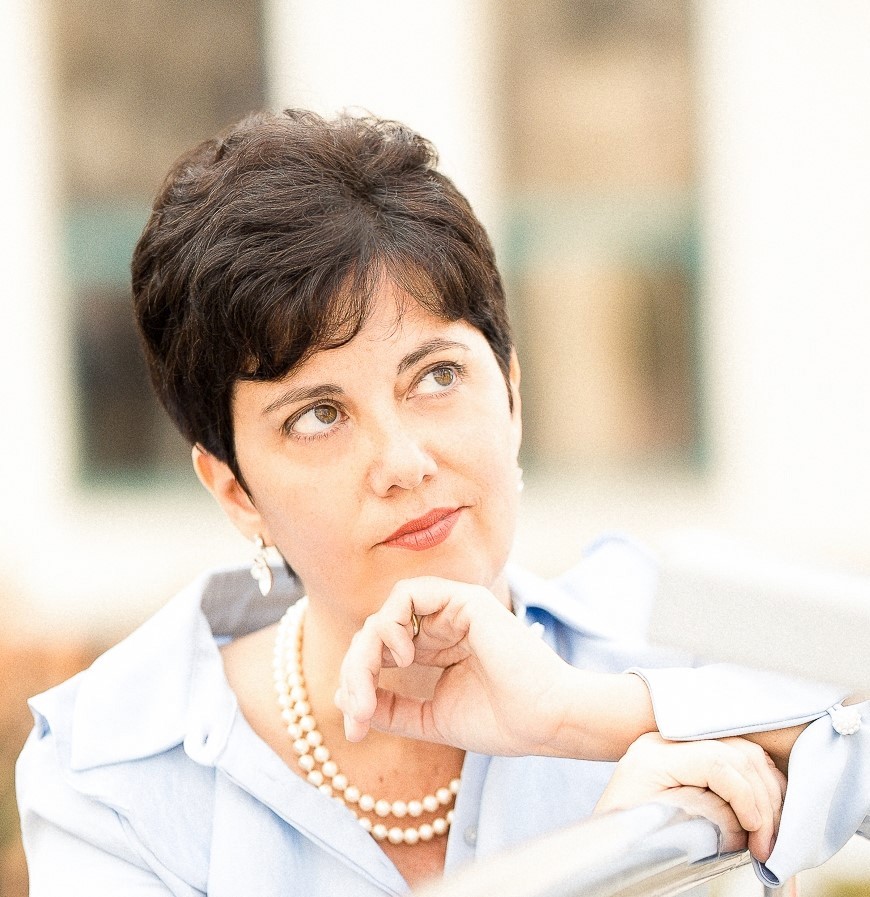
Romanian-American writer Maria-Cristina Necula was born in Bucharest and immigrated to New York at the age of twelve. As a classically-trained singer, she has performed at various venues, such as Weill Recital Hall at Carnegie Hall, Merkin Hall, Florence Gould Hall, and the Westchester Broadway Theatre. Her writing has been featured, among other publications, in “Opera America”, and she is the recipient of a 2022 New York Press Club Award in the Critical Arts Review category. She holds a Ph.D. in Comparative Literature from The Graduate Center, and is a frequent contributor to “Classical Singer” Magazine and the New York-based website “Woman Around Town.”
The Voice Beneath the Quince Tree: A Memoir of Growing Up in Communist Romania is available at Amazon on Kindle and in Paperback.

 DBN Magazine - Indie book reviews. book awards. author interviews.